Recent regulatory changes concerning fuel tanks in port facilities have reopened a relevant debate within the nautical sector: how to ensure environmental and operational safety without limiting the flexibility of port infrastructure.
Various industry publications, such as the analysis published in IBINews regarding the new regulations affecting fuel storage systems in marinas, point to a scenario where traditional infrastructure may be forced to make significant technical adaptations.
A more demanding regulatory context
Environmental regulations regarding hydrocarbon storage are evolving rapidly. The objective is clear:
- reduce the risk of contamination
- improve containment systems
- increase facility safety
However, these new requirements can entail significant adaptation costs for many marinas, especially those with rigid infrastructure installed decades ago.
Floating service stations: a flexible alternative
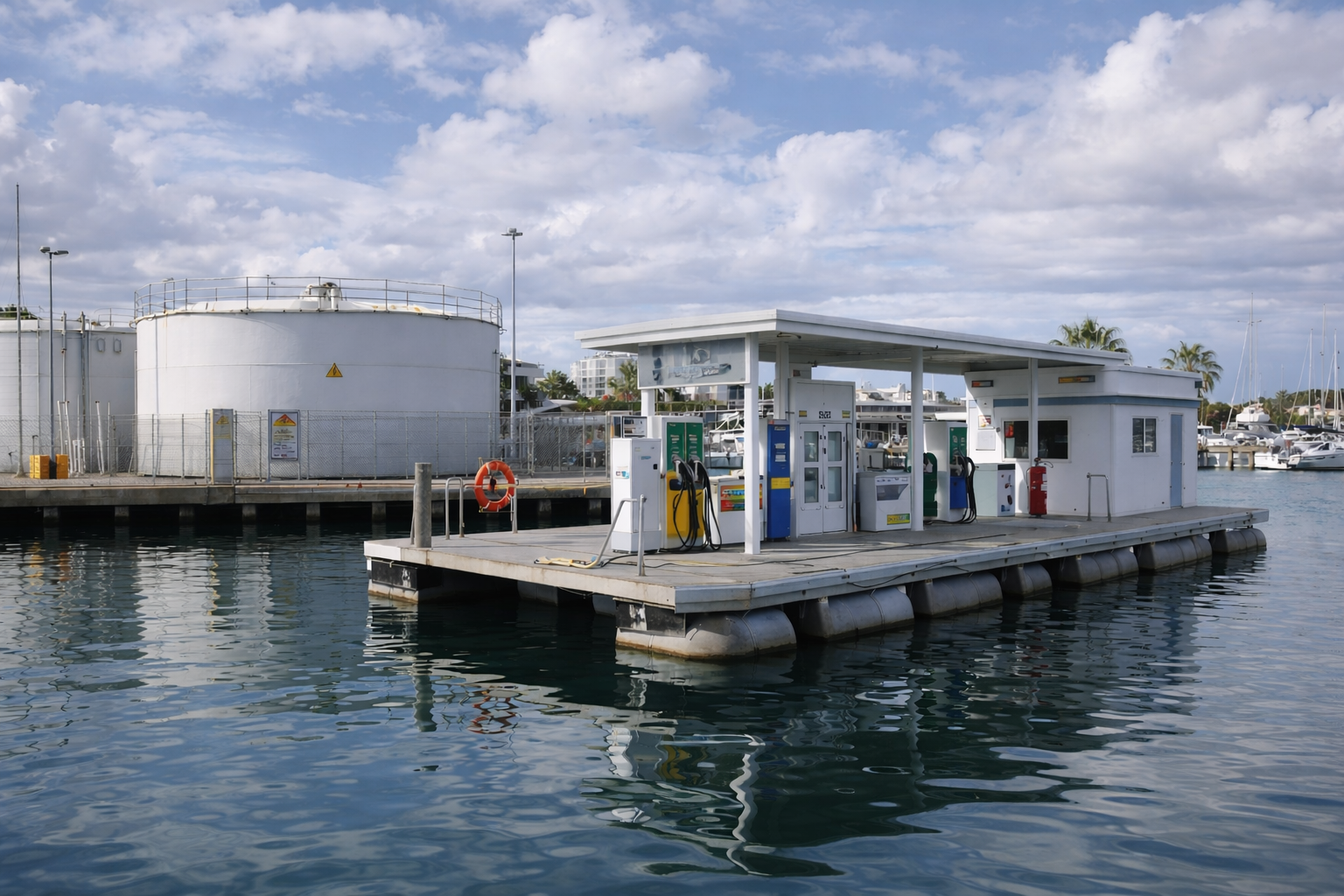
For years, at MSI we have maintained that floating service stations represent a solution particularly well-suited to this new regulatory landscape.
The main advantages are clear:
- Physical separation of the storage system from the port's fixed infrastructure
- Greater ease of technological upgrades
- Lower impact during maintenance or servicing operations
- Flexibility to adapt the installation to regulatory changes
Furthermore, floating platforms allow for the integration of modern security, monitoring, and environmental containment systems much more easily than many existing land-based installations.
Adapting the port to a changing environment
Ports and marinas operate in an increasingly complex environment where they must balance:
- environmental sustainability
- operational safety
- economic efficiency
- user experience
In this context, marine engineering must prioritize adaptable and resilient solutions capable of evolving alongside regulations and industry demands.
Looking to the future
New regulations should not be viewed solely as a technical obligation. They can also represent an opportunity to modernize infrastructure and enhance long-term performance.
The key lies in designing solutions that combine robust engineering, sustainability, and operational flexibility.
Consequently, floating infrastructures will continue to play an increasingly relevant role in the development of future marinas.